Switzerland gears up for the Longines League of Nations™ 2026
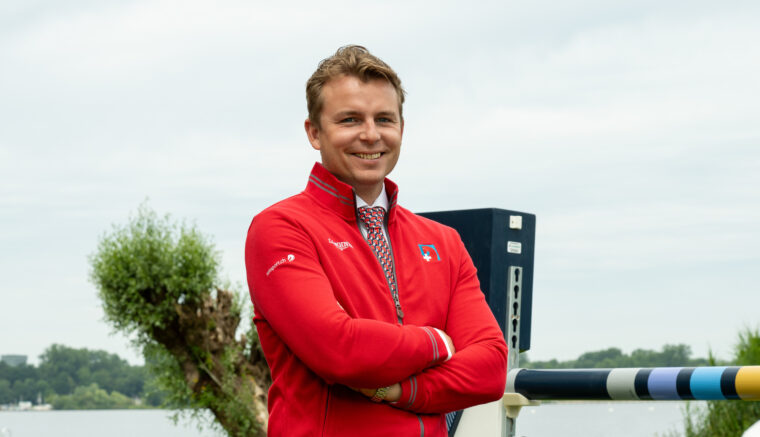
Switzerland will return to the Longines League of Nations™ 2026 season with ambition and confidence after a 2025 campaign that saw the team compete consistently among the world’s top Jumping nations. At the helm of the national Jumping programme for 2026 is Chef d’Équipe Peter van der Waaij, who has brought his extensive international experience to Switzerland’s high-performance setup. Under his guidance, along with a new team coach, Switzerland looks to continue its progression on the global stage and build momentum toward major Championships ahead, as van der Waaij discusses with the FEI:
Switzerland has built a reputation for consistency at the very top of the sport. What were the key factors behind the team’s qualification for this year’s Longines League of Nations™, and where do you feel the Swiss programme has made the biggest strides?
"In 2025 we deliberately broadened the group of athletes contributing to our Longines League of Nations™ ranking. We saw a noticeable shift, with new names in our top five and the inclusion of a new U25 athlete, which underlines that the base at the top is becoming wider. That was a clear objective for this season. Looking ahead to 2026, the focus will be on further strengthening our leading athletes so we can be competitive both in the Longines League of Nations™ and at the Longines FEI Jumping World Championship in Aachen. The biggest progress has been made in developing the next generation, and I am convinced we will benefit from this approach in the coming years. We are very much looking forward to travelling with our team to the LLN events. These shows have proven to be not only exceptionally well organised, but also highly beneficial for team spirit”
The Longines League of Nations™ places unique emphasis on team strategy across multiple legs. How do you approach athlete selection and rotation to balance form, experience, and the physical demands on horses throughout the series?
With the series starting in February and running through to October, careful management and peaking of the horses’ programmes is essential. In the early legs, we will therefore see different profiles within the team. Some horses that compete in Abu Dhabi will be given a period of rest afterwards, while others are currently being kept slightly quieter with a view to key objectives later in the spring, such as Ocala and the start of the outdoor season in Europe. As the season progresses and we approach the final leg and the Final, our selection and strategy will become more focused, based on form, fitness, and what is required at that particular stage of the competition.
Swiss athletes are known for their composure under pressure. How do you prepare the team mentally for a format where every round counts toward a collective goal rather than individual results?
Team spirit is the key element. In a team competition, the pressure is naturally higher than in individual classes, but a strong team dynamic helps our athletes carry that pressure together. By supporting one another, they can enter the arena with greater confidence while still coping with the demands of the situation. Within our team, the focus is on helping each other perform at their best rather than placing expectations on results. That way, the pressure becomes a positive and motivating factor instead of a burden.
With the Final in Barcelona as the ultimate objective, how do you manage expectations early in the season while still keeping momentum and belief high within the squad?
We approach the early legs step-by-step and do not focus too much on the Final at that stage. What matters is that every athlete goes into the ring committed to delivering their best performance. As the season progresses and the Final comes closer, we will have a clear understanding of what is needed to qualify and can adapt our strategy accordingly.
Looking beyond results, what does participation in the Longines League of Nations™ mean for Swiss Jumping in terms of development, visibility, and inspiring the next generation?
It is definitely a strong opportunity to bring more athletes to the CSIO5* stage. The fact that the Longines League of Nations™ ranking includes an U25 athlete shows that developing the next generation is an important factor for the sport as a whole. The League creates space for emerging athletes to gain experience at the highest level, and in doing so, it helps inspire younger talents. They can see that if they take the right steps in their development, there is a realistic pathway to becoming part of a team competing at the very top of the sport at venues with good infrastructure and top teams.